


Blog
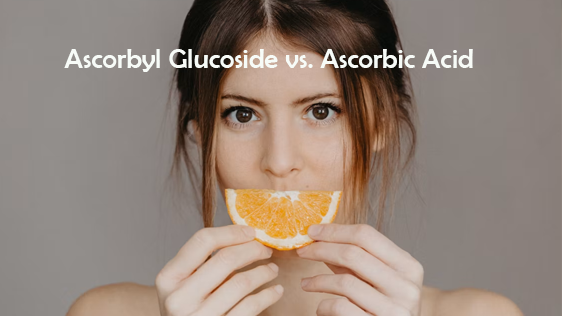


Ascorbyl Glucoside vs. Ascorbic Acid: Which Vitamin C Derivative Fits Your Formulation?
2026-06-16
In the development of high-efficacy skincare products, the choice between ascorbyl glucoside and ascorbic acid often presents a dilemma for formulators and brands. While traditional ascorbic acid is the "gold standard" for skin brightening, it suffers from poor stability and a tendency to cause skin redness and stinging.
As a global supplier of premium raw materials, Kintainutri® utilizes advanced enzymatic catalysis technology to produce Ascorbyl Glucoside AA2G powder with a purity of ≥98%. As a stable derivative of ascorbic acid, it addresses industry pain points such as product discoloration (yellowing), rancidity, and skin irritation, offering an industrial-grade solution for brightening and repair that is highly stable, long-lasting, and non-irritating.
Ascorbyl Glucoside vs. Ascorbic Acid: What Are They?
Ascorbyl glucosideis a derivative of Vitamin C (L-ascorbic acid) formed by linking ascorbic acid with a glucose molecule. This structural modification resolves the core issues associated with pure Vitamin C, namely its susceptibility to oxidation, instability, and potential for irritation. As an excellent Antioxidant and skin-conditioning agent, it is an ideal choice forcosmetic ingredient suppliers.

Ascorbic acid, commonly known as vitamin C, is an essential water-soluble vitamin for the human body. Since the body cannot synthesize it endogenously, it must be obtained through diet or supplements. It plays a pivotal role in skin health by promoting keratinocyte differentiation, reducing melanin synthesis, and providing antioxidant protection against sun damage. Its antioxidant properties are closely linked to delaying skin aging, improving pigmentation, and helping to manage certain skin conditions. Consequently, adequate daily intake is crucial for skin health.

Ascorbyl Glucoside vs. Ascorbic Acid
Similarities in Skin
AA2G (ascorbyl glucoside) and ascorbic acid share a high degree of consistency regarding skincare efficacy, as both essentially function within the Vitamin C system. Both possess significant antioxidant capabilities, enabling them to scavenge free radicals, mitigate skin damage caused by UV radiation, pollution, and oxidative stress, and delay the process of photoaging. Furthermore, both inhibit tyrosinase activity and reduce melanin production, thereby brightening the complexion, fading dark spots, and addressing uneven skin tone.
Furthermore, both ingredients promote collagen synthesis, support the repair of skin structure, enhance elasticity, and reduce the formation of fine lines. Regarding photoprotection, both enhance the skin's tolerance to UV stress, mitigate inflammatory responses, and aid in repairing UV-induced damage. Consequently, they share core functional pathways, demonstrating consistent antioxidant, skin-brightening, and anti-photoaging effects.

Key Differences
Ascorbyl Glucoside
Ascorbyl glucoside (AA2G) is derived by using biocatalytic technology to specifically attach a glucose moiety to the C2-hydroxyl group of Vitamin C. The introduction of this glycosyl structure creates significant steric hindrance, fundamentally blocking degradation attacks by light, heat, and oxygen at the oxidation-prone sites; this allows AA2G to maintain excellent physicochemical stability even in a mild, neutral environment (pH 5.0–7.0).
This structural optimization not only resolves the industry-wide challenges associated with traditional vitamin C, such as formulation discoloration and loss of efficacy, but also eliminates the reliance on strongly acidic systems. By offering superior formulation compatibility and skin tolerance, AA2G serves as an ideal core active ingredient for developing high-concentration, safe, and non-irritating functional skincare products.
Ascorbic Acid
Ascorbic acid (Vitamin C) exhibits poor stability and is prone to degradation caused by various factors. Environmental stressors include alkaline pH (which accelerates oxidation), high temperatures (causing significant loss during thermal processing, following first-order kinetics), light exposure (with UV wavelengths directly triggering degradation), and transition metal ions (which catalyze Fenton reactions). The degradation mechanism involves reversible oxidation to dehydroascorbic acid, followed by irreversible hydrolysis into 2,3-diketogulonic acid. Therefore, formulations often require a strongly acidic environment (pH ≤ 3.5) to delay oxidation.
However, such highly acidic, high-concentration systems can severely compromise the skin barrier, directly triggering clinical irritation symptoms such as erythema, burning sensations, and stinging. Consequently, key industry strategies to balance formulation stability with skin tolerance include adding antioxidants (such as glutathione), employing microencapsulation, or substituting the ingredient with the neutral and gentle derivative AA2G.
| Comparison | L-Ascorbic Acid (Pure Vitamin C) | Ascorbyl Glucoside (AA2G) |
|---|---|---|
| Chemical nature | Vitamin C prototype | VC derivative (VC + glucose) |
| Stability | Highly prone to oxidation, turns yellow | Very stable, resistant to light and heat |
| Irritation potential | May cause stinging; use with caution on sensitive skin | Mild, virtually non-irritating |
| Mechanism of action | Direct action | Slowly converts to VC after penetrating the skin |
| Suitable skin types | Well-tolerant, non-sensitive skin | Sensitive skin, dry skin, compromised skin barrier |
| Typical concentration | 5% – 20% | 2% – 5% |
Ascorbyl Glucoside vs. Ascorbic Acid: Applications
Ascorbyl Glucoside
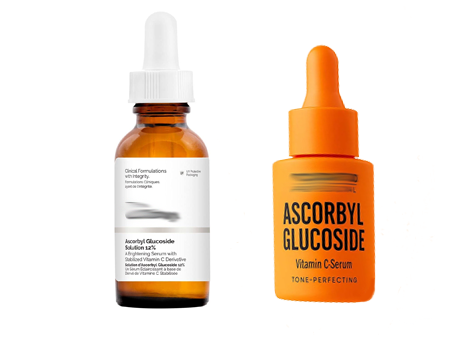
Ascorbyl glucoside is a stable derivative of Vitamin C, primarily used in skincare products. For brightening and whitening, it effectively fades dark spots and acne marks by inhibiting tyrosinase activity and reducing melanin production. Regarding antioxidant properties, it scavenges free radicals and combats photoaging caused by UV radiation and pollution. In terms of anti-aging, it stimulates collagen synthesis, enhances skin elasticity, and reduces wrinkles.
Compared to pure vitamin C, it offers superior stability and lower irritation. It remains effective at a pH of 5–7, eliminating the need for a low-pH environment and making it particularly suitable for sensitive skin. Currently, it is used at concentrations of up to 5% in leave-on products and is widely incorporated into serums, creams, lotions, and sunscreens.
Ascorbic Acid
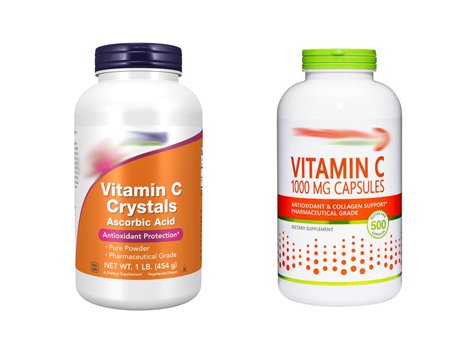
In food processing, it maintains the color and flavor of baked goods, seafood, and meat products and extends their shelf life by inhibiting enzymatic browning and delaying protein oxidation. It also enhances product safety by blocking the formation of nitrosamines.
In the field of nutritional fortification, it is added to dairy products, cereal premixes, and animal feed to compensate for the body's limited endogenous synthesis, promote iron absorption, and improve growth performance and immune function. Development trends are shifting from direct addition toward more stable derivatives and encapsulation technologies, though low-cost, easily scalable delivery solutions remain a key focus of current R&D.
About Kintainutri®
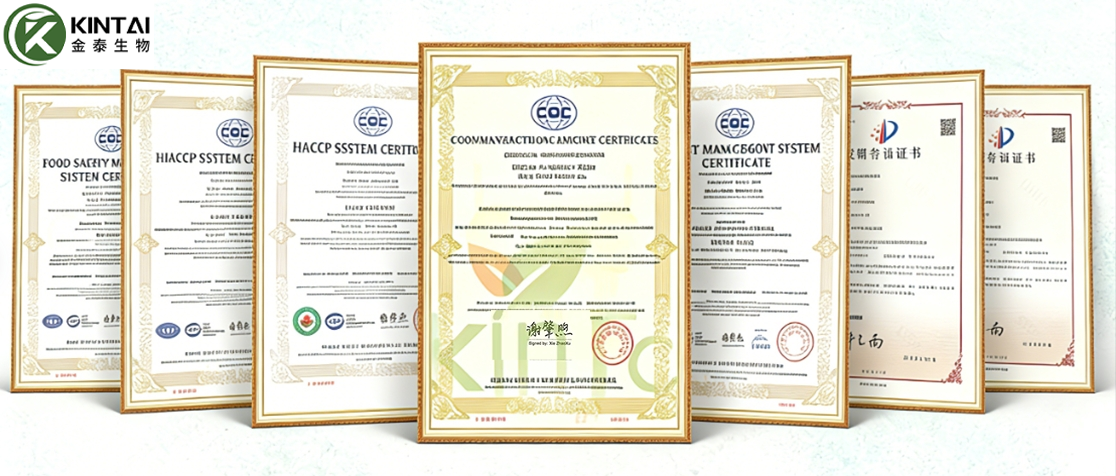
Looking to optimize your Vitamin C formulation? Contact Kintainutri®. Backed by rigorous quality control and continuous technical innovation, we supply high-quality ascorbyl glucoside AA2G powder with a consistent purity of ≥98%, helping you accelerate the development of premium, gentle whitening and repair products. Contact us for free AA2G samples and technical specifications, and let us help you build a safer, more effective health product ecosystem.
Reference:
[1]: CIR Safety Assessment of Ascorbyl Glucoside and Sodium Ascorbyl Glucoside, 2020.
[2]: https://ods.od.nih.gov/factsheets/VitaminC-HealthProfessional/
[3]: https://pmc.ncbi.nlm.nih.gov/articles/PMC8773188/
[1]: CIR Safety Assessment of Ascorbyl Glucoside and Sodium Ascorbyl Glucoside, 2020.
[2]: https://ods.od.nih.gov/factsheets/VitaminC-HealthProfessional/
[3]: https://pmc.ncbi.nlm.nih.gov/articles/PMC8773188/